Guide · Hardiness zones
Why your USDA zone makes or breaks your yard
The single number that decides whether a plant thrives for decades or dies its first winter — how hardiness zones work, where they fall short, and how to shop by them.

YardRemake Studio
Published July 18, 2026 · 5 min read · 5 sections
On this page
Walk into any garden center and you’ll see gorgeous plants that have no business living in your yard. The tag might not warn you loudly, the plant looks healthy today, and the price is right — but if it’s rated for a warmer zone than yours, you’re not buying a plant. You’re renting one until the first hard freeze.
Your USDA hardiness zone is the closest thing gardening has to a cheat code. Here’s how it works, and how to use it without getting burned.
What a hardiness zone actually measures
The USDA Plant Hardiness Zone Map divides North America into numbered bands based on one thing: the average annual extreme minimum temperature — in plain English, how cold the coldest night of a typical winter gets where you live.
USDA hardiness zones
average coldest night of winter
- Each full zone covers a 10°F band, and splits into an a (colder) and b (warmer) half, 5°F apart. Zone 7a bottoms out around 0–5°F, zone 7b around 5–10°F.
- Higher numbers mean milder winters.
- That’s it. A zone is not about summer heat, rainfall, humidity, or soil — it’s a winter-survival number. Which is exactly why it matters so much for the plants you expect to keep.
Why it matters more for some plants than others
Annuals — the petunias and tomatoes you replant every year — don’t really care about your zone. They’re finished before winter arrives either way.
Trees, shrubs, and perennials are a different story. These are multi-year investments. A tree you plant this fall is supposed to be shading your patio in fifteen years. If it’s rated for zone 8 and you garden in zone 6, it doesn’t matter how well you water it or how good your soil is: the first winter that hits its kill temperature will take it out, along with the money and the years.
Cold damage is also sneaky. A borderline plant might survive two or three mild winters in a row, get established, look great — and then a normal-for-your-zone cold snap kills it just as it was getting good. The zone rating exists to warn you about the winter you will eventually get, not the winter you had last year.
The simple rule for shopping
For anything you want to keep for years:
- Buy plants rated for your zone number or lower. In zone 7, a “zones 4–8” shrub is a safe long-term citizen. A “zones 8–11” plant is a gamble.
- Treat warmer-zone plants as annuals or pot plants. There’s nothing wrong with enjoying a zone-10 hibiscus in zone 6 — just plant it in a container you can drag into the garage in November, and don’t design your yard around it.
- Give borderline plants your best microclimate. Every yard has warm pockets: against a south-facing wall, near pavement that soaks up heat, sheltered from wind. A plant rated half a zone more tender than your area can often make it there. The open middle of the lawn is your coldest spot — save it for the tough stuff.
Where zones fall short
Zones are necessary, not sufficient. A few honest caveats:
- They say nothing about heat. Zone 8 covers both rainy Seattle and scorching central Texas. A plant can be winter-hardy in your zone and still cook in your summer.
- They’re averages. Roughly half of winters will dip below your zone’s “average” coldest night. A once-a-decade polar snap can run a full zone colder — which is why the truly permanent bones of your yard (big trees, foundation shrubs) deserve an extra zone of margin.
- Your yard isn’t uniform. Frost pools in low spots; walls and fences create warm niches. Your ZIP code’s zone is the starting point, not the whole map.
How YardRemake bakes this in
We built zone-awareness into the product so you don’t have to cross-reference tags by hand.
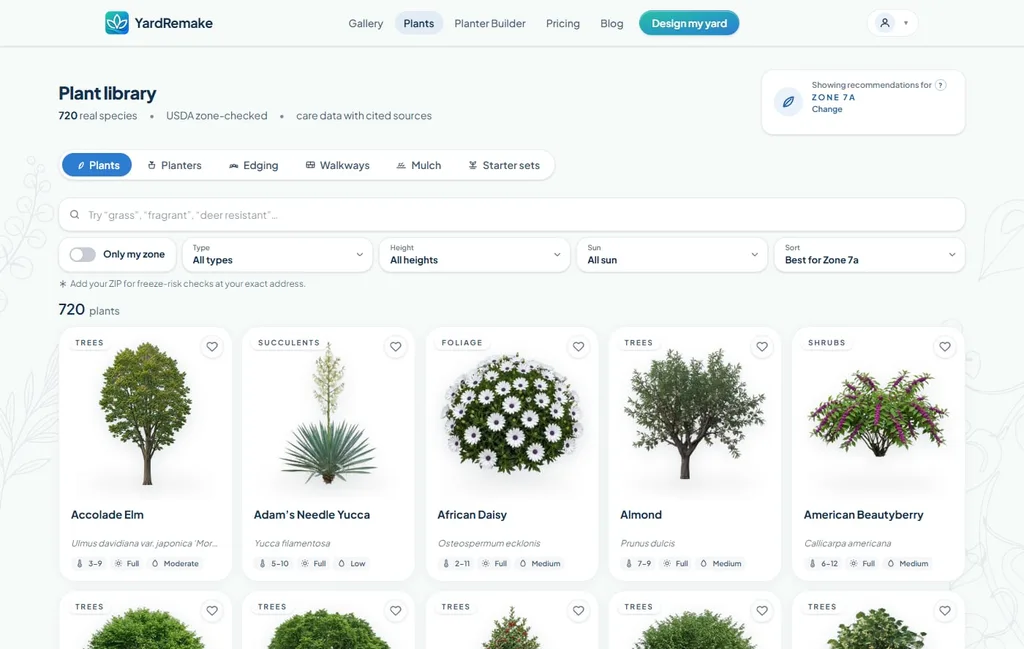
The plant library knows your zone. Enter your ZIP once and flip on “Only my zone” — everything you browse is filtered to plants that can actually live where you do.
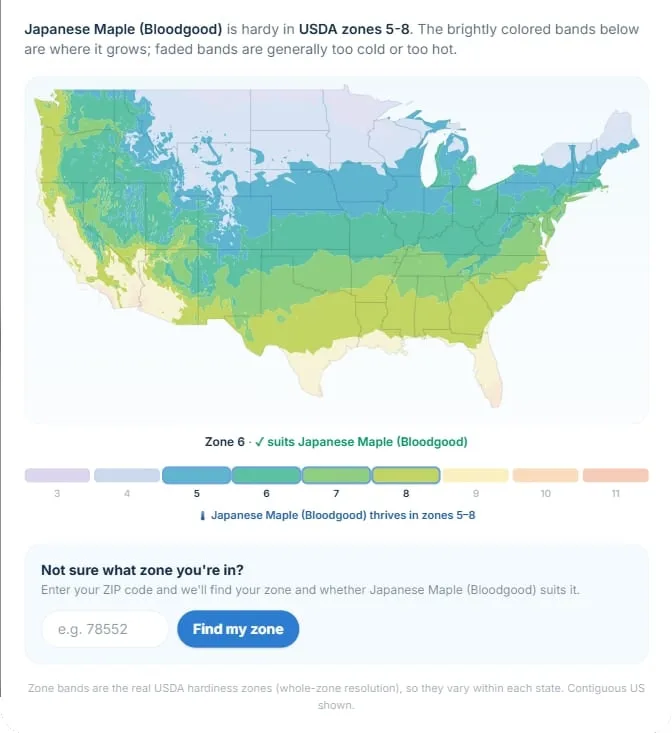
Every plant page maps where it grows. Real sub-state USDA zone bands, with your ZIP pinned, so a borderline call is a look — not a guess.
“Will it survive your winters?” goes beyond the label. Zones describe an average bad winter — so each plant page also checks decades of real winter-low history from the weather station nearest you against that plant’s cold tolerance, and flags borderline picks before you buy.

Starter sets are organized by zone. Our researched plant groupings are built zone-by-zone, so the canopy, mid-layer, and ground cover in a set are all rated to survive together. And when you reimagine your yard, the AI’s plant list links back to these same zone-checked species pages — so the design you fall in love with is one you can actually plant.
Find your zone, respect it for the permanent stuff, bend it for fun in pots — and your yard will still be paying you back twenty years from now.
