Guide · Where to start
How to work out what’s actually wrong with your yard
You can tell your yard isn’t right but can’t name why. Here’s the diagnostic pass to run before you spend anything — the four absences behind most disappointing yards, and the order to fix them in.

YardRemake Studio
Published August 27, 2026 · 6 min read · 7 sections
On this page
You know the feeling. You pull into the driveway, look at the front of your house, and something is off — but if someone asked you what, you’d say “I don’t know, it just looks… unfinished.”
That vagueness is the actual problem. Not the yard. A yard you can’t describe is a yard you can’t start on, because every option feels equally plausible and equally arbitrary. So you buy a flat of annuals, put them somewhere, and it still looks unfinished.
Naming the problem is most of the work. “The lawn is thin and there’s bare soil along the strip left of the walkway” points at exactly one fix. “It looks unfinished” points at a garden center and a lost Saturday.
Here’s how to do the naming part.
Look for absence, not ugliness
The instinct is to walk around hunting for something bad — a dead shrub, a weed patch, a cracked paver. That’s why the instinct fails. Most disappointing yards contain nothing ugly at all. They’re disappointing because of what isn’t there.
Four absences account for most of it:
- Bare soil. Any ground that is neither planted nor deliberately covered reads as unfinished, no matter what else you do. It is also the cheapest thing on this list to fix.
- No edge. Where a bed dissolves gradually into lawn, the whole yard looks blurry. A defined line between the two does more for a photo than most planting does.
- No middle. There’s grass at ankle height and a tree at roof height and nothing in between. The eye has nowhere to rest between the ground and the sky, so the house looks like it was dropped on the lot.
- No focal point. Nothing your eye lands on first. A yard with no answer to “where do I look?” reads as busy even when it’s sparse.
That’s my framing, not a formal taxonomy — but run it on your own front yard and see how many of the four you can tick. Two is common. Three is very common.
Photograph it from four places
Stand where people actually stand:
- From the street, where every visitor and neighbor sees it
- From the front door looking out, which is the view you get every single day
- From wherever you actually park, which is the view you get in a hurry
- From the window you sit at, which is the one that matters most and the one nobody designs for
Take a photo from each. Not for anyone else — for you. A photo flattens the scene, and flattening it defeats the editing your brain does when you walk past something a thousand times. Things you have stopped seeing show up immediately in a picture.
Design for the view you actually use. A yard optimized for a street view you glance at twice a day, at the expense of the window you sit at every evening, is a common and expensive mistake.

Sort by cost before you fall in love
Once you have a list, price it roughly before deciding what excites you. The order changes when you do.
Cheap, and enormously effective in a photo: defining a bed edge, mulching bare soil, cutting back an overgrown foundation shrub that’s swallowing a window, removing one plant that’s in the wrong place.
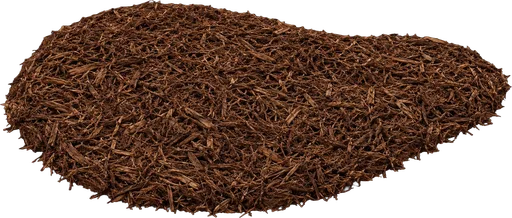
Brown Hardwood
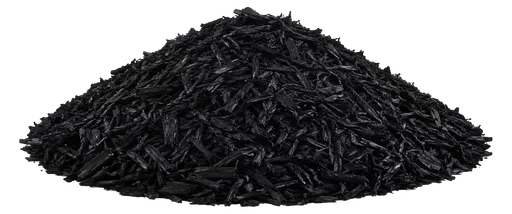
Black
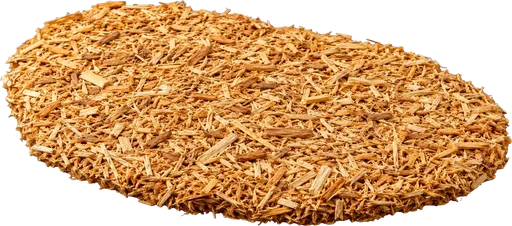
Natural Cedar

Pine Bark Nuggets
Expensive, and slow: hardscape, retaining walls, mature trees, anything involving a machine or a permit.
Most people fall in love with something from the second list first, discover the number, and do nothing at all for a year. Working the cheap list first buys you a yard you like while you save for the expensive thing. If you want real regional numbers rather than a guess, our cost estimator prices work against cited sources for your area.
Fix the frame before the furniture
There’s an order to this, and getting it backwards is the most common way to waste money on a yard.
Bones first. Edges, structure, the evergreen shapes that hold the picture together in February. Then the middle layer — the shrubs and grasses that fill the gap between ground and canopy. Then color.
Colour bought first is the classic error. Annuals are cheap, immediate, and satisfying, so they get bought before anything else — and they end up decorating a structure that doesn’t exist yet. The bed still has no edge, the middle is still empty, and now there are petunias in it.

What a second pair of eyes does
The hard part of all this is that you can’t see your own yard properly. You’ve looked at it too many times.
That’s what Yard Checkup is for. Upload a photo of your yard and it runs this diagnostic pass on it: it names at most five things, worst first, and says where in the photo each one is. Where a finding maps to a tool that genuinely fixes it, there’s a button.
Two honest things about it.
Not every finding gets a button. The tools it can hand you off to are clean-up, lawn, adding planting, hardscape, and a full redesign. Checkup can’t send an edge finding straight to a tool yet, so “no defined edge”, one of the most valuable findings on the list, arrives as advice. Pick an edge in the studio’s Edging tab (27 styles) and draw it in yourself.
It reads one photograph. It doesn’t know your soil, your drainage, which corner floods in March, or what the yard looks like in August. It is not a soil test, a survey, or an arborist, and it will never tell you a tree is unsafe.
It needs an account, and it doesn’t cost a credit.
Why it says nothing rather than “all clear”
One deliberate design decision worth explaining, because it looks like a bug the first time.
If the checkup has nothing to say, it says nothing. It never tells you your yard is fine.
That’s because a genuinely clean yard and a checkup that failed look identical from where you’re standing. If we printed a reassuring “all clear”, we’d be printing it in both cases — and the one time it mattered, we’d be telling someone their yard was perfect because a request timed out. Silence is the only honest empty state we can offer.
Then pick one thing
The point of naming five problems isn’t to fix five problems. It’s to know which one is first.
Take the cheapest finding on your list and do it this weekend. Edge one bed. Mulch the bare strip. Cut the shrub off the window. Then take the photo from the street again and compare it to the one you started with — that comparison is what tells you whether you’ve correctly identified what was actually wrong.
